



-
By Luxury van
-
Minimum 4
-
Hotels(3*,4* with Breakfast and Dinner)
-
Chauffeur - English
Overview
Embark on an enchanting journey through the legendary landscapes of Sri Lanka, where the timeless tales of the Ramayana come alive. This tour will take you through ancient temples, majestic fortresses, and mystical caves, immersing you in the rich cultural and spiritual heritage of the Ramayana.
Trip Highlights
- Koneshwaram Temple, Trincomalee
- Sigiriya Rock Fortress-Lion Rock
- Kandy Temple of Tooth Relic
- Seetha Amman Kovil, Nuwara Eliya
- Ashok Vatika
- Divurumpola Temple
- Thotupola Kanda
- Ravana Cave-Ella
- Ravana Water Fall
- Galle-Unawatuna Beach
- Colombo
Itinerary
Koneshwaram Temple, perched on a cliff overlooking the Indian Ocean in Trincomalee, is one of Sri Lanka's most revered Hindu temples. Dedicated to Lord Shiva, this ancient temple is intertwined with the legendary tales of the Ramayana and the demon king Ravana. Known as the "Temple of a Thousand Pillars," Koneshwaram is not only a place of spiritual significance but also a site of immense historical and cultural importance.
The Legend of Ravana:
In the Ramayana, Ravana is depicted as a devout follower of Lord Shiva. The legend holds that Ravana, in his quest for invincibility and strength, performed intense penance and prayers to Lord Shiva at Koneshwaram Temple. The temple is thus considered one of the principal sites where Ravana sought divine favor.
Koneshwaram Temple:
Historical Significance: Koneshwaram Temple has a history that spans over two millennia. It is believed to have been constructed in the classical Dravidian architectural style and has been a significant center for Hindu worship in Sri Lanka.
Mythological Connection: According to local folklore, Ravana's devotion to Lord Shiva led him to build this temple at Swami Rock, a site chosen for its dramatic and serene location. It is said that Ravana prayed here to gain the boons that made him a formidable warrior.
Exploring Koneshwaram Temple:
Sacred Shrine: The main shrine of the temple houses a revered Shivalingam, believed to be worshipped by Ravana himself. Devotees from around the world come here to offer prayers and seek blessings.
Ravana's Footprints: Near the temple, there are indentations in the rock that are said to be Ravana's footprints, adding a tangible connection to the mythological king.
The Lover’s Leap: This famous spot near the temple offers breathtaking views of the ocean. According to legend, Ravana’s queen Mandodari is said to have leapt from this rock in despair, adding to the site's mythological richness.
Cultural and Spiritual Experience:
Annual Festivals: Koneshwaram hosts grand festivals, particularly during Maha Shivaratri, attracting thousands of pilgrims. These festivals are a vibrant display of devotion and cultural heritage.
Spiritual Reflection: Visitors can partake in rituals and prayers, immersing themselves in the spiritual ambiance that pervades the temple. The serene environment and the sound of the waves create a perfect setting for meditation and reflection.
Conclusion:
Koneshwaram Temple, with its profound connections to Ravana and the Ramayana, offers a unique blend of history, spirituality, and mythology. This sacred site stands as a testament to Ravana’s devotion and the enduring legacy of the epic. For those on a Ramayana tour, Koneshwaram provides an opportunity to connect deeply with the epic’s spiritual dimensions and explore the rich tapestry of Sri Lanka’s cultural heritage.
Join the Journey:
Discover the sacred grounds where Ravana once prayed, and immerse yourself in the divine atmosphere of Koneshwaram Temple. This stop on the Ramayana tour promises a profound and enriching experience, bridging the mythical past with the vibrant present.
Stay over night in Trincomalee
Sigiriya, also known as Lion Rock, is a UNESCO World Heritage Site and one of Sri Lanka's most iconic landmarks. This ancient rock fortress, rising majestically from the central plains, is not only a testament to the ingenuity of ancient Sri Lankan civilization but also steeped in legends, including those of the epic Ramayana. According to local folklore, Sigiriya was one of the palaces of the demon king Ravana, adding a mystical allure to its historical significance.
The Legend of Ravana:
In the epic Ramayana, Ravana is depicted as the powerful and learned king of Lanka, who abducts Sita, the wife of Lord Rama. Various locations in Sri Lanka are believed to be connected to the Ramayana's narrative, and Sigiriya is one such site with a compelling association.
Stay over night in Sigiriya
Kandy is a major city in Sri Lanka, known for its rich history, cultural significance, and natural beauty. Located in the central part of the island, it is a UNESCO World Heritage Site and serves as a major tourist destination. Here’s a summary of Kandy and its notable visiting places:
Overview of Kandy
Historical Significance: Kandy was the last capital of the ancient kings of Sri Lanka. It played a critical role in preserving Sinhalese culture and traditions during the colonial period.
Cultural Hub: The city is a center for arts, culture, and religion, particularly Buddhism. It hosts numerous festivals and cultural events, with the Esala Perahera being one of the most famous.
Geography: Nestled amidst the hills, Kandy is surrounded by lush greenery and scenic landscapes, including tea plantations and dense forests.
Top Visiting Places in Kandy
Temple of the Sacred Tooth Relic (Sri Dalada Maligawa):
Significance: This temple houses the relic of the tooth of the Buddha, making it one of the most sacred Buddhist sites in the world.
Highlights: Intricate architecture, cultural performances, and the daily rituals conducted by monks.
Kandy Lake:
Description: An artificial lake created by King Sri Wickrama Rajasinghe in 1807, located in the heart of the city.
Activities: Strolling along the lakeside, boat rides, and enjoying the scenic views.
Royal Botanical Gardens, Peradeniya:
Overview: One of the finest botanical gardens in Asia, established in 1821.
Features: Over 4,000 species of plants, including orchids, medicinal plants, and palm trees, as well as a beautiful orchid house and a giant Javan fig tree.
Udawatta Kele Sanctuary:
Nature Reserve: A historic forest reserve located on a hill-ridge in Kandy.
Attractions: Rich biodiversity, walking trails, and panoramic views of the city.
Kandy Viewpoint:
Location: A popular spot on Rajapihilla Mawatha Road.
Highlights: Offers a stunning panoramic view of the city, especially beautiful at sunrise and sunset.
Ceylon Tea Museum:
Significance: Showcases the history and legacy of Ceylon tea.
Exhibits: Antique tea-processing machinery, historical documents, and a tea-tasting section.
Bahiravokanda Vihara Buddha Statue:
Description: A giant Buddha statue located on Bahirava Kanda hill.
Activities: Climbing the hill for close-up views of the statue and a panoramic view of Kandy.
Kandy National Museum:
Exhibits: Artifacts from the Kandyan era, including jewelry, weapons, and traditional costumes.
Location: Near the Temple of the Tooth.
Commonwealth War Cemetery:
Historical Site: A beautifully maintained cemetery dedicated to soldiers who died during World War II.
Atmosphere: Peaceful and reflective, providing insights into the wartime history of the region.
Cultural Events
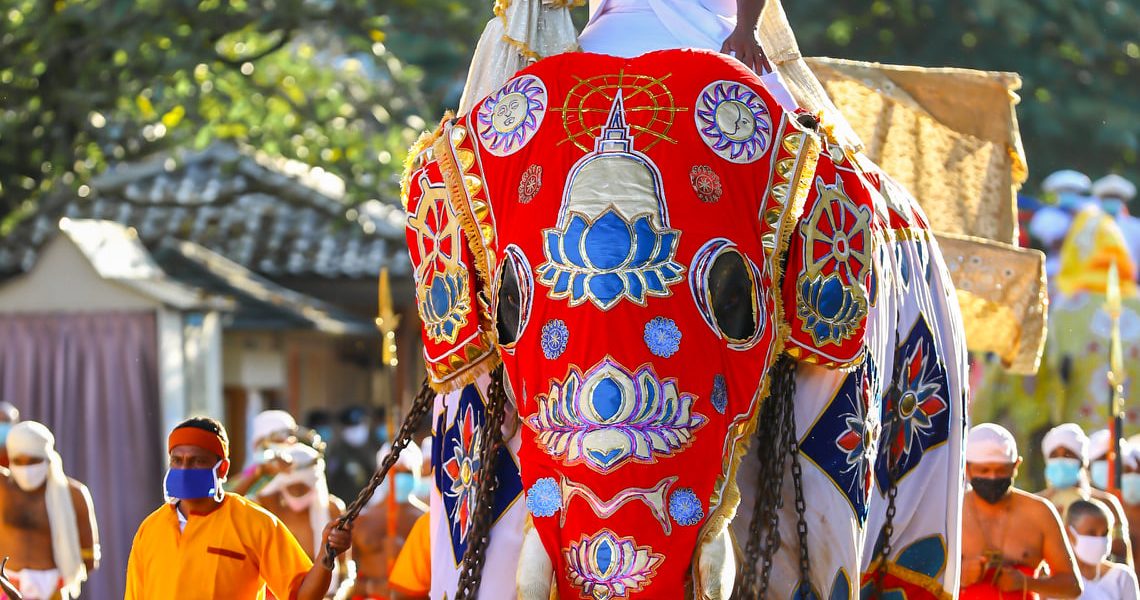
Esala Perahera: A grand annual procession held in July or August, featuring traditional dancers, drummers, and decorated elephants. It is one of the oldest and grandest Buddhist festivals in Sri Lanka.
Overnight stay in Kandy
Seetha Amman Kovil
Location: Near the town of Nuwara Eliya, in the village of Sita Eliya, Sri Lanka.
Significance:
The Seetha Amman Kovil is a Hindu temple dedicated to Seetha (Sita), the wife of Lord Rama.
According to the Ramayana, this is the place where Seetha was held captive by Ravana, the demon king of Lanka.
It is believed that this site marks the exact spot where Seetha prayed daily for Rama to rescue her.
The temple features statues of Rama, Seetha, Lakshmana, and Hanuman.
Architecture and Features:
The temple has a distinct South Indian architectural style.
There are foot imprints nearby, believed to belong to Hanuman, the monkey god who brought Rama's message to Seetha.
The temple is situated on the banks of a stream, adding to its serene and spiritual ambiance.
Asoka Vatika
Ashoka Vatika, now known as Hakgala Botanical Garden, is a place where mythology and nature blend harmoniously. Its association with the Ramayana adds a rich cultural and spiritual layer to its natural beauty, making it a significant destination for both nature lovers and devotees of Hindu mythology.
Ravana Cave
Location: Near Ella, Sri Lanka, about 50 kilometers away from the Seetha Amman Kovil.
Significance:
The Ravana Cave is part of a larger network of tunnels said to have been used by Ravana to travel across his kingdom.
It is believed that Ravana used these caves to hide Seetha after abducting her.
The cave is a significant archaeological site, adding to its historical importance.
Features:
The cave is located 1,370 meters above sea level on the foundation of a cliff.
Inside the cave, there are narrow passages and a small chamber, giving a glimpse into ancient engineering.
The surrounding area is lush with greenery, and the Ravana Falls nearby add to the natural beauty.
Overnight stay in Ella
Galle is a prominent city on the southwestern coast of Sri Lanka, known for its rich history, colonial architecture, and beautiful beaches. Here’s a brief overview of Galle and its notable attractions:
Overview of Galle
Historical Significance: Galle has a long history that dates back to pre-colonial times, but it is most famous for its period under Portuguese, Dutch, and British rule.
Colonial Architecture: The city is renowned for its well-preserved colonial architecture, particularly within the Galle Fort, a UNESCO World Heritage Site.
Top Visiting Places in Galle
Galle Fort:
History: Originally built by the Portuguese in the 16th century and later extensively fortified by the Dutch in the 17th century.
Features: Cobblestone streets, historic buildings, museums, churches, and the iconic lighthouse.
Galle Lighthouse:
Description: Situated within Galle Fort, it is one of the oldest lighthouses in Sri Lanka and offers stunning views of the Indian Ocean.
Activities: Ideal for photography and a leisurely stroll along the fort walls.
Dutch Reformed Church:
History: Built by the Dutch in 1755, it is one of the oldest Protestant churches in Sri Lanka.
Features: Notable for its unique architecture, antique wooden pews, and gravestones embedded in the floor.
National Maritime Museum:
Overview: Located within Galle Fort, it showcases the maritime history of Sri Lanka.
Exhibits: Artifacts from shipwrecks, models of ships, and displays on marine biodiversity.
Jungle Beach:
Location: A secluded beach near Galle, known for its tranquil environment.
Activities: Swimming, snorkeling, and enjoying the serene natural setting.
Unawatuna Beach:
Description: A popular beach destination just a few kilometers from Galle.
Attractions: Golden sands, turquoise waters, and a variety of beachfront restaurants and bars.
Overnight stay in Galle
Colombo is the bustling capital city of Sri Lanka, known for its vibrant mix of modernity and colonial charm. Here’s a brief overview of Colombo and its notable attractions:
Overview of Colombo
Economic Hub: Colombo is the commercial and financial center of Sri Lanka, home to many corporate offices, shopping centers, and entertainment venues.
Overnight stay in Colombo
Cultural Melting Pot: The city showcases a blend of cultures, with influences from Portuguese, Dutch, and British colonial periods, as well as diverse ethnic communities.
Top Visiting Places in Colombo
Galle Face Green:
Description: A popular ocean-side urban park stretching along the coast.
Activities: Kite flying, picnicking, and enjoying street food while watching the sunset.
Gangaramaya Temple:
Significance: One of the most important Buddhist temples in Colombo.
Features: A mix of architectural styles, a museum, a library, and a relic chamber.
Colombo National Museum:
Overview: The largest museum in Sri Lanka, established in 1877.
Exhibits: Artifacts from Sri Lanka’s history, including ancient manuscripts, royal regalia, and artwork.
Pettah Market:
Description: A bustling bazaar with a maze of narrow streets and stalls.
Products: Everything from fresh produce and spices to electronics and clothing.
Viharamahadevi Park:
Location: The largest and oldest park in Colombo, located near the National Museum.
Attractions: Large Buddha statue, beautiful flowering trees, and playgrounds.
Independence Memorial Hall:
Historical Significance: Built to commemorate Sri Lanka’s independence from British rule in 1948.
Features: Colonial architecture and a museum detailing the independence movement.
Beira Lake:
Description: A scenic lake in the heart of Colombo.
Activities: Boating and visiting the Seema Malaka Temple, which sits on the lake.
Mount Lavinia Beach:
Transportation: Colombo is well-connected by road and rail. Tuk-tuks, taxis, and buses are common means of transportation within the city. Location: Just south of the city, it’s a popular spot for beachgoers.
Attractions: Golden sands, clear waters, and numerous beachside restaurants and bars.
Continue Colombo City Tour and Departure
Cost Includes
- ****Star Hotel booking with Breakfast and Dinner
- Luxury van for round tour
- Experience driver and Chauffeur guide-English Speaking
- Water bottles
- Insurance for travelers
- All highway tolls and parking charges
Cost Excludes
- Lunch
- Sight Entrance tickets
- Visa Charges
- Personal Expenses
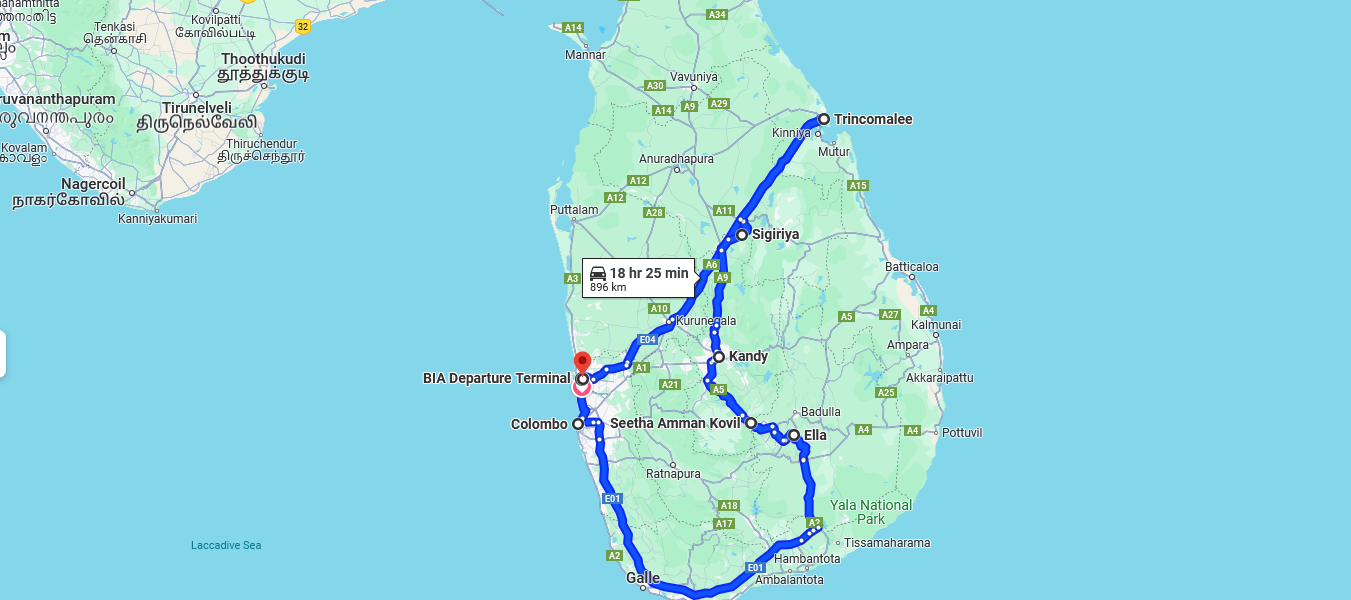
Tour Map